How to Reduce No-Shows and Late Cancellations (2026)
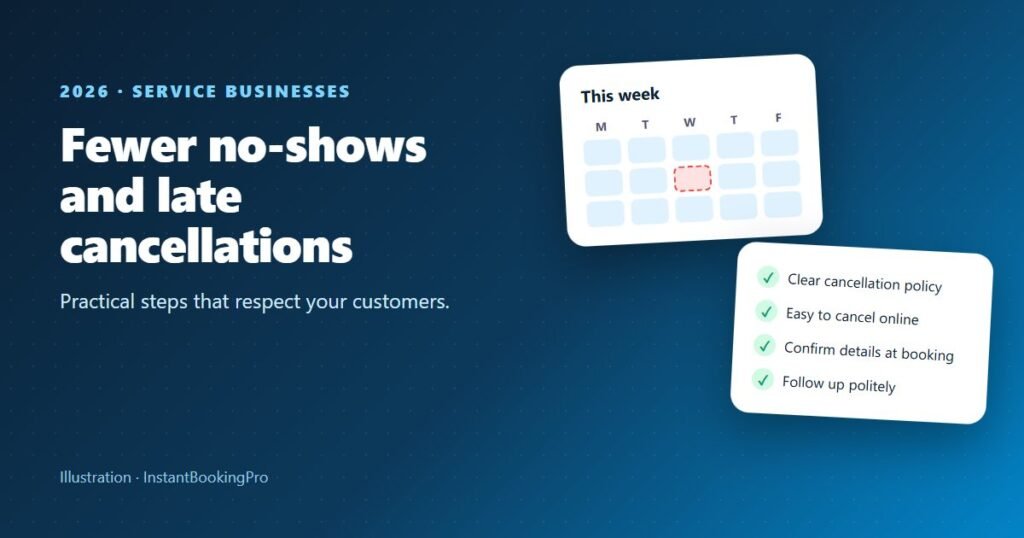
To reduce no-shows and late cancellations: make your cancellation policy clear and get customers to agree to it before they book, make it easy to cancel or move a booking (so people cancel instead of just not turning up), confirm the details that matter at booking time, send a reminder before the appointment, keep a short waitlist to refill gaps, and follow up no-shows politely. If you charge deposits or cancellation fees, tell customers before they book and keep fees to your reasonable costs. Consumer law sources are linked below, checked 19 October 2026.
General information only. This guide isn’t legal advice. Whether a fee or deposit is fair depends on your terms, your costs and the circumstances, so check the official sources linked here and get legal advice on your terms and conditions.
An empty slot costs you twice: the income you planned on, and the customer you turned away because the time looked taken. You won’t get no-shows to zero, but most of the fixes are simple and cost nothing. We haven’t found official figures on how common no-shows are, so this guide sticks to what you can do.
Why customers don’t turn up
- They forgot. Especially when they booked weeks ahead.
- Cancelling felt like a hassle. If the only way to cancel is a phone call during business hours, some people simply don’t come.
- They didn’t know it mattered. No-one told them about the policy, or it was buried.
- The booking was wrong. The wrong service, time or address, so it was never going to work.
- Life happened. Illness and emergencies. A good policy allows for these.
9 ways to reduce no-shows and late cancellations
- Write a clear cancellation policy Say how much notice you need and what happens if a customer cancels late or doesn’t arrive, in plain words.
- Show it before they book, and get agreement Consumer Affairs Victoria says that if businesses include terms about fees, deposits or cancellation charges, “they should make customers aware of them before they book” (Consumer Affairs Victoria).
- Make cancelling easy A customer who can cancel online in a minute is far more likely to free up the slot than one who has to ring you. A freed slot can be rebooked; a no-show can’t.
- Confirm the details at booking The right service, time and, for mobile work, the address and access details. Fewer mistakes means fewer wasted trips.
- Send a reminder A short message the day before, by text, email or a quick call, with an easy way to cancel or change. Manual reminders work if your booking system doesn’t send them.
- Keep a waitlist A short list of customers who want an earlier time, so a late cancellation becomes someone else’s booking.
- Think about deposits for long or high-value jobs If you take a deposit, tell customers before they book and keep it proportionate (see below).
- Follow up no-shows politely Check they’re OK and offer a new time. Most people are embarrassed, not careless. Track repeat no-shows and decide case by case.
- Book people sooner The further ahead a booking is, the more chance plans change. Open your diary so customers can find a time soon.
Can I charge a cancellation fee or keep a deposit?
Often, if it’s in your terms, the customer agreed before booking, and the amount is fair. Points from the official guidance:
- Tell them first. Fees, deposits and cancellation charges should be disclosed before customers book; not doing so “could also be considered unfair, due to a lack of transparency” (Consumer Affairs Victoria).
- Keep fees to reasonable costs. Fees and charges should “reflect reasonable costs. Otherwise, they may be seen as penalties, which generally cannot be enforced” (same source).
- Get consent before charging a stored card. If you record card details when a customer books, tell them at the time that their card will be charged if they cancel, and make sure they accept that condition (same source).
- Unfair terms are banned. Since 9 November 2023, proposing, using or relying on unfair contract terms in standard form contracts is banned and penalties apply. The ACCC’s examples include terms that penalise one party but not the other for ending the contract (ACCC: contracts).
- No card surcharges from 1 October 2026. The ACCC says businesses can no longer charge a surcharge for payments made with Visa, Mastercard, American Express or eftpos cards from that date (ACCC: payment methods).
- Consumer guarantees still apply. If you cancel, run very late or don’t deliver the service with due care and skill, the customer’s rights don’t disappear because of your policy (ACCC: consumer guarantees).
Consumer Affairs Victoria’s guidance (written for tourism businesses) says a fair deposit would generally not be more than 10 per cent of the total cost unless the potential loss justifies more. That’s guidance, not a legal cap, and it isn’t written for every industry.
How InstantBookingPro helps, and what it doesn’t do
We’ll be straight about this: InstantBookingPro doesn’t send reminders, and it doesn’t take deposits, payments or cancellation fees. What it does do:
- Your cancellation policy is shown before the booking is confirmed, and customers tick to agree to it.
- Customers can cancel online from their bookings page, which frees the slot for someone else straight away. To move a booking, they cancel and book a new time.
- Customers only see times that are genuinely free, based on your hours, breaks and days off, so there are no double bookings to cancel.
- Booking notes capture the details you need, such as an address or access instructions.
Reminders are still worth doing by hand, from your bookings list the day before. See it for salons and barbers, cleaning businesses and car washes, or try the live booking demo. You may also find what missed calls cost your business and how to take bookings online useful.
Want customers to agree to your policy before they book? Your branded booking page, set up for you, from $59 a month including GST. Typically live within 24 hours.
Start my booking system Book a demo
Just starting out? See the starter package with a website.
Frequently asked questions
How do I reduce no-shows and cancellations?
Can I charge customers who don’t show up?
Is it legal to keep a deposit if a customer cancels?
Do reminders reduce no-shows?
Can I add a surcharge to card payments for cancellation fees?
Does InstantBookingPro send appointment reminders?
Official sources checked on 19 October 2026. Rules change; confirm current details on the linked pages and get legal advice on your terms and conditions.
Get instant online bookings
We build and launch your branded booking system for you — typically live within 24 hours.